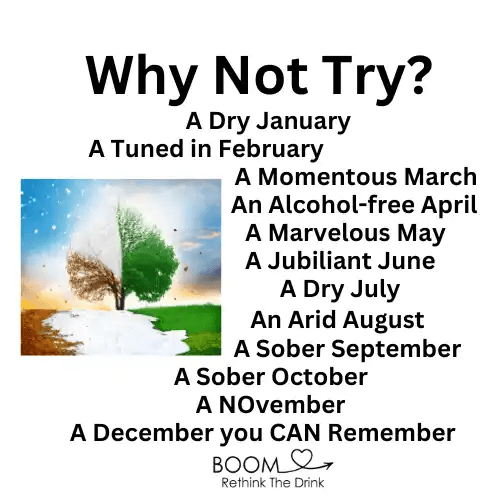
I feel that I am slowly adjusting to the reality of the commitment I have made to myself to remain alcohol-free, and I have to say that it feels so right and good. I like myself a lot better. I have never been an out-of-control, hitting rock-bottom drinker. My friends are a little surprised when I tell them I have a problem with alcohol, and I don’t mind being open about that because there’s no reason to be ashamed of it. A lot of people can relate to it. At the same time, I don’t wear it on my sleeve or use it as a way to bring attention to myself and create drama. My commitment to stay alcohol-free is what it is and that’s it. I don’t mind talking about it openly but I do not invite drama into my life.
One of the reasons I have made the decision to go alcohol-free is because I want to show up in life. I want to have the best relationships I can with the people in my life and really be present and attentive to them. This starts with the relationship I have with myself.
When I drink I’m checking out. I will likely be too self-medicated or tired and hungover to be there for all the beautiful little moments. Really being awake to life requires that we be connected and present. If you are someone who can drink and still be that person, then good for you. I can’t have it both ways.
I want to show up for life and be present and really here for friends and the people and things that are important to me. I feel that alcohol stands in the way of that. It’s ironic because the reason I use it is to connect but in the end, it actually curtails an authentic, genuine connection.
For the past couple of years, I have been on a spiritual path. My daily practice includes yoga, meditation, prayer, and readings. I am especially interested in Bhakti yoga (Ram Dass and Krishna Das among others) and Buddhism (Jack Kornfield and Sharon Salzberg among others). Painting is also a part of this practice. This is where I find my connection.
But there is the shadow, my shadow, to work with, listen to, integrate, and love. That shadow part likes to drink.
I had an existential crisis a couple of years ago and really I think I’m still going through it. It is partly age-related (I’m 48). Some people might call it a mid-life crisis and that is part of it. A crisis that can occur in mid-life. I guess I saw looking forward, and even at the present, that I may be in for a difficult time for a while emotionally and that drinking wasn’t going to help me navigate through some difficult waters.
My commitment to living alcohol-free is a commitment to being present not just for others but for myself.
I need to be all here for myself now. Alcohol is a depressant after all. I’ve had some dark moments that come and go when I’ve asked myself, “What’s the point of continuing”? As difficult a question as that is, it is a good question. It helps me when I can remind myself of the people and things in my life that I’m grateful for. This helps to fill the hole or void that appears sometimes, so frightening and seemingly real.
Slowly I find myself reorganizing my priorities in life. Some of the things I keep, some of the things no longer serve me. Alcohol, for now, does not. The anger I just sit with in a gentle compassionate way, the way we might do with a child who is upset or afraid or angry.
Just sit and be with.
I have learned to do this from doing The Presence Process. For in these moments we really are very vulnerable and are actually revisiting past stuff, our inner child, I believe – WE ARE THE ONLY ONES WHO CAN BE THERE FOR OURSELVES UNCONDITIONALLY. No one else has ever or will ever be able to do this. Not mother, not father, not partner, not our children. And so we become our own parents. And we can do it, the parenting, in a gentle, loving way.
As I see it, we must deal with the stuff inside, the point of causation which are the emotional charges and triggers which result in addictions. The addiction is only a symptom. This is my point of view, I am certainly not an expert and and only speaking from my own experience and beliefs. Bottom line, we can remain alcohol-free for one week, one year or the rest of our days, but until we deal with the inner stuff we are only dealing with the symptoms, not the causes. There are different ways to do this, whatever works. The Presence Process has been one of the most practical, helpful, and direct ways for me personally.
As Michael Brown says so beautifully in his book, “It’s never to late to have a happy childhood”. I’m not going to say I will never drink again, but for now I will not.
Will you join me?

This post was written by Robert
Find more of Robert’s writing on the Boozemusings Blog Here
and his artwork on his website Here
WHO ARE WE?
Online Community Support to Stop Drinking – BOOM!
If you’re “sober curious” …If you are drinking too much too often and want to stop or take a break… Talk to Us.
We are an independent, anonymous and private community who share resources, support and talk it through every day. It helps to have a community behind you in a world where alcohol is the only addictive drug that people will question you for NOT using